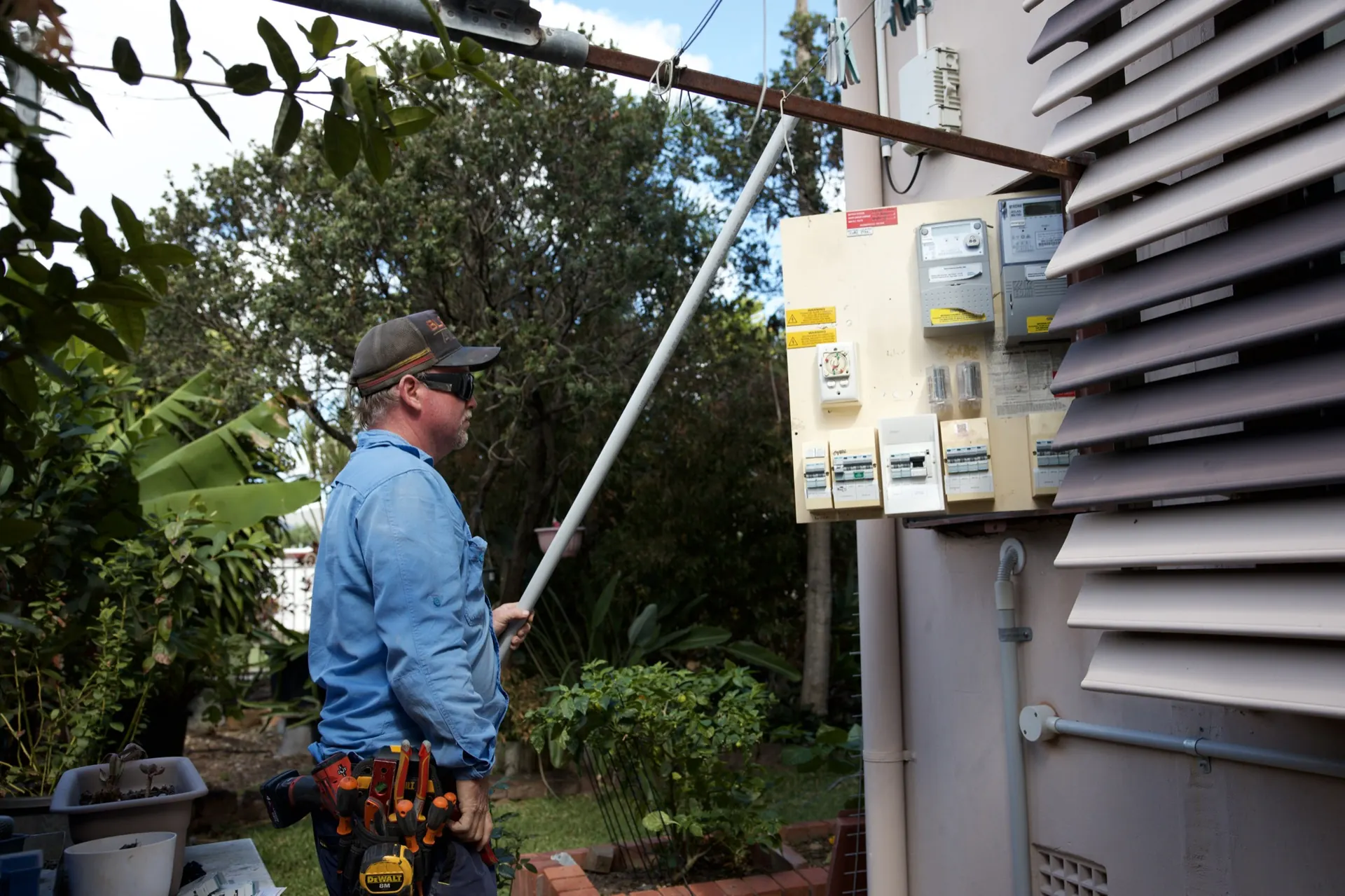
What a safety switch does that a circuit breaker does not
A safety switch cuts the power when it detects current leaking out of the circuit, for example through a person, and stops the current flowing. A circuit breaker protects the wiring and appliances from overload. Circuit breakers protect the wiring and appliances, and safety switches protect people.
In Queensland an approved safety switch trips at 30 milliamps or less. Most homes need both kinds of device, and they sit side by side in the switchboard.
When Queensland law requires a safety switch
New Queensland homes have needed safety switches on all power point circuits since 1992, and on power point and lighting circuits since 2000. From 2019, the current edition of the Australian Wiring Rules requires one on every circuit leaving the switchboard in new work. That includes the oven, hot water and air conditioning.
The same rule applies when a switchboard is replaced or an existing circuit is altered. A like-for-like swap of a fitting in the same spot does not trigger it.
For an existing home that is not having work done, the law is narrower. When a home is sold, the seller must tell the buyer in writing whether the power point circuits have a safety switch, and the buyer must fit one within 90 days of moving in if they do not. When a home is rented, the owner must fit one on the power point circuits within 90 days of the tenancy starting.
Why we fit one on every circuit anyway
The sale and rental rules only cover the power points. The lights, the oven, the hot water and the air conditioning can all still be unprotected in a home that passes them. The Electrical Safety Office advises safety switches on all of those circuits, as well as on the pool.
When we upgrade a switchboard, every circuit gets one, because the Wiring Rules require it for that work. When we do other work in a home with no safety switch on the power points, the law requires us to fit one there before we start.
How to check and test the ones you have
Open the switchboard and look for switches with a T or TEST button. Those are safety switches. A switch without a test button is probably a circuit breaker.
Press each test button every three months. The power to that circuit should cut out straight away. If it does not, the safety switch has failed and needs replacing. If a fridge or air conditioner is on that circuit, wait two to three minutes before switching it back on.
If you count only one or two safety switches, they are probably covering the power points and nothing else.
In older Townsville homes, and Queenslanders in particular, we often find boards that still have old fuses, circuits like the stove and the lights with no safety switch, and safety switches that no longer trip because of their age.